
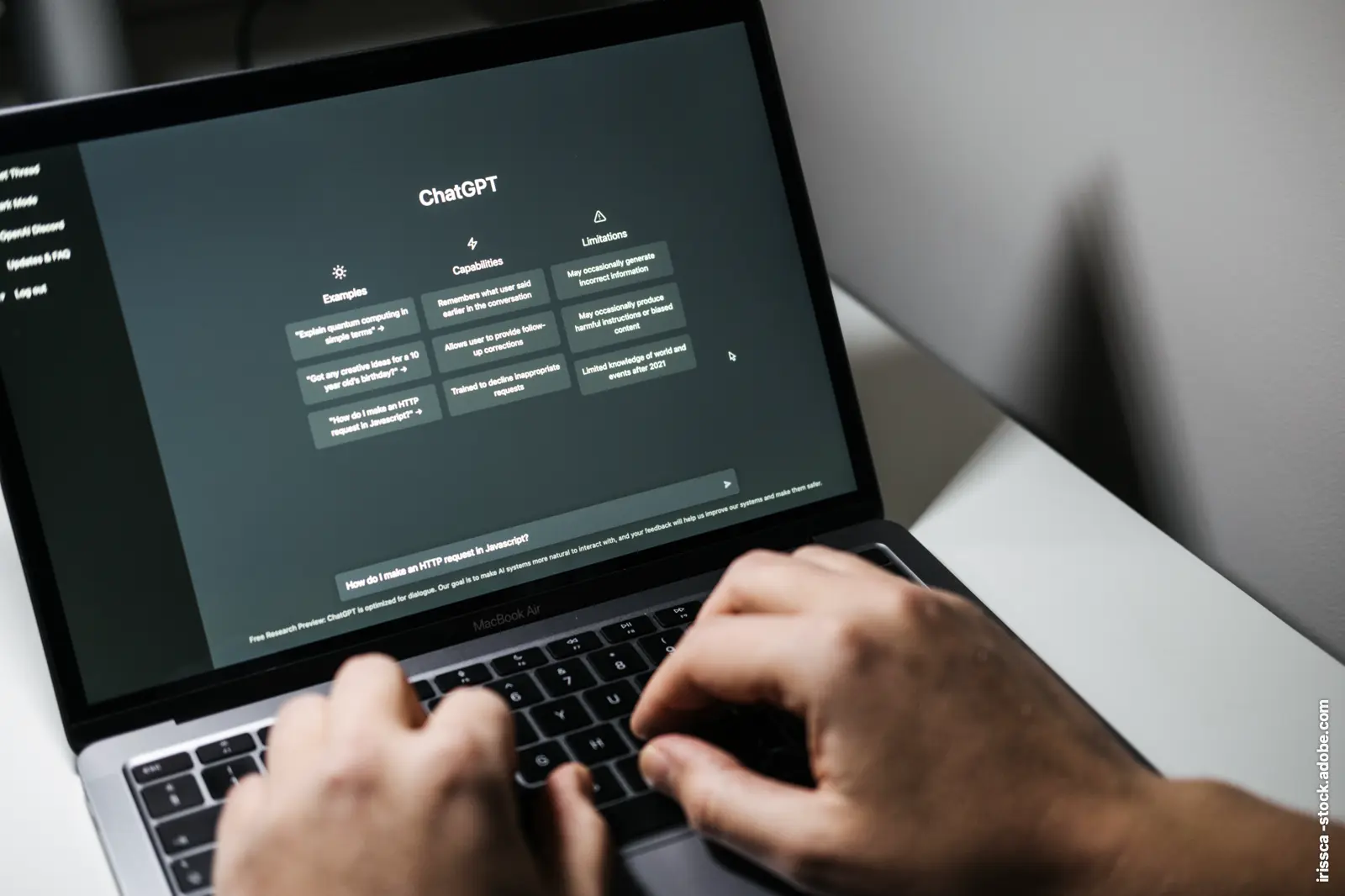
At 5:13 this morning, Apple wrote back. The iPhone and iPad version of my Markdown editor Hybrid had been in review for six days. I was prepared for anything: a button I had overlooked, a question about collaboration over iCloud, a screenshot that didn’t fit. It turned out differently. The app was rejected over a single word: ChatGPT.
Not a bug, but geography
The reviewers had tested Hybrid on an iPad Air and an iPhone 17 Pro Max and found nothing wrong with the app itself. No crash, no design issue, no privacy question. The finding is filed under “Guideline 5 – Legal” and concerns exactly one country: China.
Hybrid keeps track of which passage of a text was written by a human and which by an AI. Part of that is a button that hands a text over to ChatGPT, Claude or Perplexity. The App Store description says so. And that is where Apple found it. The app is associated with ChatGPT, the review team writes, and the service “does not have requisite permits to operate in China”.
One detail worth noting: the objection names “ChatGPT” and “GPT”. Claude and Perplexity appear in the very same sentence of the description, but not in the rejection.
What China asks of AI services
This is no whim of Apple’s. It is Chinese law. Since January 10, 2023, the country’s provisions on so-called deep synthesis technologies have been in force, issued by the internet regulator CAC, the Ministry of Industry and Information Technology (MIIT) and the Ministry of Public Security. On August 15, 2023, the “Interim Measures” for generative AI followed. Anyone offering such services to the public in China has to register them and have them assessed. In its rejection, Apple additionally points to a licence from the MIIT.
The big Western providers are not even in the game. Mainland China is missing from OpenAI’s list of supported countries, and from Anthropic’s list for Claude as well.
Apple enforces this in the China App Store, and not just since yesterday. In early August 2023, shortly before the new rules took effect, more than a hundred ChatGPT-style apps were removed there. What was new to me is how far it reaches: apparently it is enough for the name to appear in the metadata, that is, in the title, the subtitle, the description or a screenshot.
A nice footnote: the Mac version of Hybrid has been in the store for weeks, with the same button and the same sentences. In China, too. Nobody noticed until the iPhone version came along.
Three ways out, two of them theoretical
Apple’s rejection names three options.
One: switch the feature off for China and remove every mention of ChatGPT and OpenAI from texts and images. For me that would mean a special version of the app, new descriptions in nine languages and 90 new screenshots. For a button that leads nowhere in China anyway.
Two: object, if you hold the necessary permits. I am a one-person business from Hagenbach, a small town in south-west Germany. A licence from China’s industry ministry is not on my list for this quarter.
Three: don’t offer the app in China.
What I did
Option three. It took one checkbox in the availability settings, one sentence in the notes for the reviewers, and a resubmission. Same build, same texts, back in the queue two hours after the rejection.
There is one catch: availability applies to the whole app, not per device. So along with the iPhone version, the Mac version has left the China store as well. Hong Kong, Macau and Taiwan have stores of their own and stay. So does the Chinese translation; it is read in Singapore, after all.
What this means for small developers
If you are building an app that mentions ChatGPT anywhere, three things are worth knowing.
It is about words, not just features. Hybrid has no language model of its own and no connection to OpenAI’s interface. The app puts a text on the clipboard and opens another app. What counted in review was still what the metadata says.
The box for China is ticked by default. If you leave “all countries” selected when you submit, you are submitting in China too. If you know your app names Western AI services, you can save yourself the rejection and a week of waiting by unticking China beforehand.
The decision is smaller than it sounds. A market of more than a billion people, simply crossed off? For a tool whose core feature cannot be used there, that is not a loss. It is honesty. Large companies build special versions and employ lawyers. Small developers decide pragmatically.
It is a bit of a pity all the same. The question of who wrote a text, human or machine, comes up in Shanghai just as it does in Hagenbach. Only with different machines.
Now it is back to waiting. A shorter wait this time, I hope.